
 English
 Español
Product Consultation
Your email address will not be published. Required fields are marked *
Solar Wall Lights can still work without sunlight, but the duration of their operation depends on the stored energy in the built-in battery and the charging status before.
The core working principle of a solar wall light is that during the day, the solar panel converts sunlight into electrical energy, which is stored in a lithium-ion or nickel-metal hydride (NiMH) battery. At night or in low light conditions, the stored energy is used to power the LED light. Therefore, as long as there is enough energy stored in the battery, the solar wall light can still function in cloudy or rainy weather, or even during consecutive days with no sunlight. For example, a mainstream solar wall light equipped with a 3000 mAh lithium battery, when fully charged, can run in sensor mode for 8–12 nights, or in constant low-power mode for 3–5 nights, which is sufficient for most cloudy or rainy scenarios.
It is worth noting that solar wall lights can still charge under cloudy conditions, as diffused sunlight can also provide energy. On cloudy days, the solar irradiance on the ground is about 15%–40% of the sunlight on a clear day (100–300 W/m²). A monocrystalline silicon solar panel can still achieve 20%–45% of its peak charging efficiency under these conditions, providing a continuous supplement to the battery.
Content
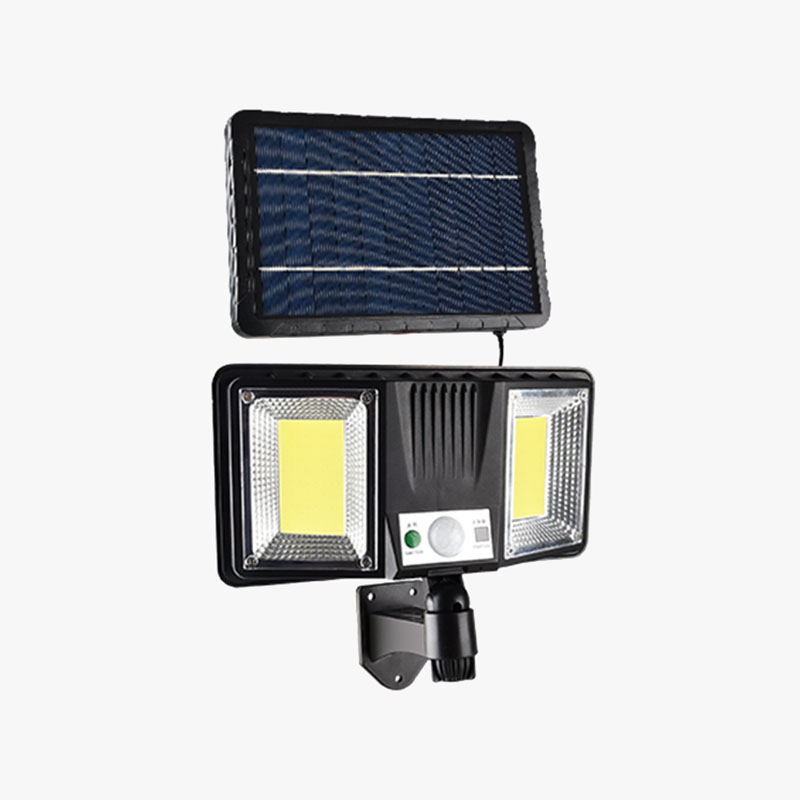
To answer the core question of whether solar wall lights can function in cloudy weather, it is essential to understand their full working principle. A complete solar wall light system consists of the following five main functional modules working together:
| Core Module | Components | Working Mechanism | Performance Parameters |
| Photovoltaic Power Generation | Monocrystalline silicon / polycrystalline silicon solar panel | Photon excitation generates voltage difference at the PN junction, converting solar radiation to DC power | Efficiency: Monocrystalline 18%–23%, Polycrystalline 15%–18% |
| Energy Storage | Lithium-ion battery / lithium iron phosphate battery / NiMH battery | Stores the DC power generated by the solar panel, supplying power to the LED in low-light conditions | Capacity: 800–5000 mAh, cycle life 500–2000 times |
| Charge and Discharge Control | MPPT maximum power point tracking controller / PWM controller | Optimizes charging efficiency, prevents overcharging and deep discharge, extending battery life | MPPT efficiency ≥93%, 25% more charging capacity than PWM |
| Sensor Trigger | PIR (Passive Infrared) sensor / radar microwave sensor | Detects human or moving targets, triggering high-brightness mode; switches to low brightness or off when no movement | Detection range: 3–8m, detection angle: 90°–120° |
| LED Illumination | COB integrated LED / SMD surface-mount LED | Efficiently converts electrical energy into light; lifespan far exceeds traditional bulbs | Light efficiency: 100–180 lm/W, lifespan ≥30,000 hours |
Energy flow path: Sunlight → Solar panel generates DC → Charge control module adjusts → Lithium battery stores → PIR sensor triggers → LED light emits. In the absence of sunlight, the entire chain draws power from the lithium battery to drive the LED, operating exactly like mains-powered lighting, except the energy comes from stored energy rather than real-time generation.
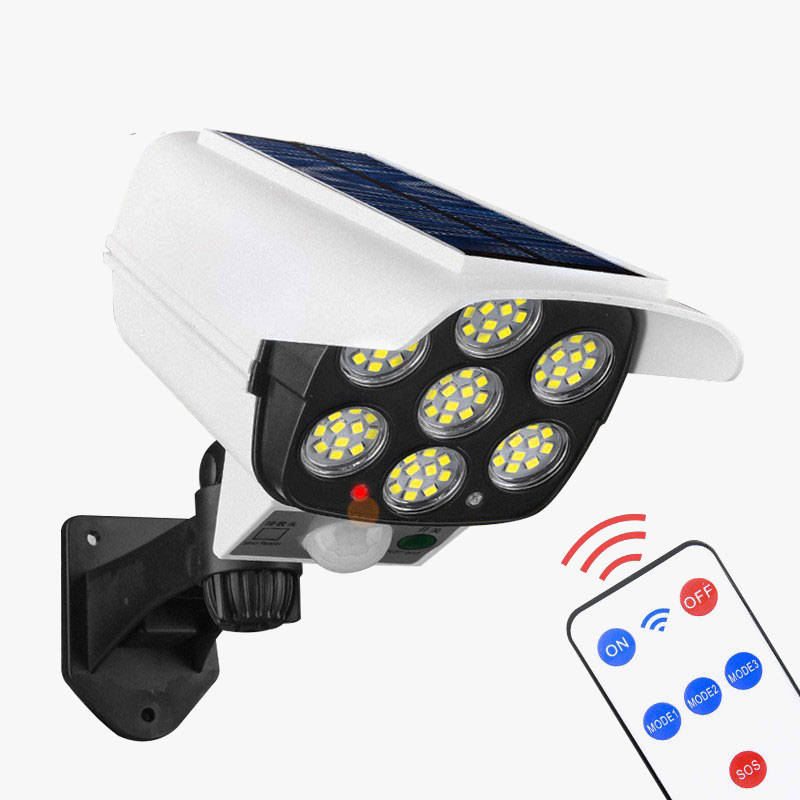
The actual impact of cloudy and rainy weather on the battery life of solar wall lights is much smaller than most people expect. Below is a comparison of real-life tested data:
| Weather Conditions | Solar Irradiance | Charging Efficiency (Relative to Sunny Days) | Energy Collected in 8 Hours | Possible Nighttime Operation (Sensor Mode) |
| Sunny (Summer Noon) | 800–1000 W/m² | 100% (Benchmark) | Approx. 2800–3500 mAh | 10–14 Nights |
| Sunny (Morning/Evening / Fall/Winter) | 300–600 W/m² | 35%–65% | Approx. 1000–2200 mAh | 4–8 Nights |
| Light Cloud/Light Overcast | 200–400 W/m² | 20%–45% | Approx. 700–1600 mAh | 3–6 Nights |
| Heavy Cloud/Moderate Overcast | 100–200 W/m² | 10%–22% | Approx. 350–780 mAh | 1–3 Nights |
| Continuous Overcast/Heavy Rain | 20–80 W/m² | 2%–9% | Approx. 70–315 mAh | 0.5–1 Night (depending on stored energy) |
| Nighttime/Complete Darkness | 0 W/m² | 0% | 0 mAh | Only uses stored energy |
Data Notes: The above data is based on mainstream solar wall lights equipped with a 5W monocrystalline silicon solar panel and a 3000 mAh lithium battery, tested at a standard temperature of 25°C. Actual battery life may vary by about 15%–25% due to factors such as panel orientation, dust accumulation on the panel, and battery aging.
The battery is the core variable in the solar wall light's performance during cloudy weather.
Recommendation: In northern cold areas (winter temperatures below -10℃), solar wall lights with lithium iron phosphate (LiFePO4) batteries should be prioritized, as their low-temperature capacity retention is about 10% higher than that of ternary lithium batteries, making them the best choice for winter operation in high-latitude regions. Battery capacity should not be less than 2000 mAh, and for high-frequency use, 4000 mAh or more is recommended.
The type and area of the solar panel directly impact the charging efficiency under cloudy conditions, which is how quickly the solar wall light replenishes its energy.
Monocrystalline Silicon Solar Panels: Efficiency 18%–23%, currently the most popular photovoltaic technology for solar wall lights, excellent weak-light performance, with charging efficiency still 10%–15% higher than polycrystalline panels in cloudy weather.
Polycrystalline Silicon Solar Panels: Efficiency 15%–18%, cost-effective, with slightly weaker weak-light performance, suitable for economic solar wall lights in sunlit areas.
Amorphous Silicon Thin Film Panels: Best weak-light performance (charging efficiency about 110% of monocrystalline silicon under cloudy conditions), but overall efficiency is low (about 8%–12%), larger in size, and suitable for special scenarios that require flexible installation.
Panel Area: For the same technology, the larger the solar panel area, the higher the charging power. Common solar panel sizes for solar wall lights range from 50 to 200 cm², with corresponding charging power of about 2–10W. Doubling the area will approximately double the charging capacity on cloudy days.
Understanding the solar wall light's performance in cloudy weather helps consumers focus on the following key parameters when purchasing:
Battery Capacity: Recommended ≥2000 mAh (for general household use), ≥4000 mAh for high-frequency usage; prioritize lithium iron phosphate batteries, with a cycle life ≥2000 times.
Solar Panel Power: Recommended ≥3W (small size) or ≥6W (medium to large size), monocrystalline silicon efficiency is optimal, with more stable weak-light charging performance.
LED Light Output: Wall light illumination should be ≥300 lm (for porch or pathway lighting), and ≥800 lm for security lighting or surveillance assistance, with light efficiency ≥100 lm/W.
Protection Rating: For outdoor use, the protection rating should be ≥IP65 (dustproof and resistant to strong water jets); for coastal or high-humidity regions, IP66 or higher is recommended.
Sensor Range and Angle: Recommended sensor range ≥5m, with a detection angle ≥120°, to ensure timely activation when a person approaches.
Low-Temperature Operating Range: Northern users should confirm that the product's low-temperature operating range is ≤-20℃ to avoid battery failure during winter.
Solar Wall Lights can fully work without sunlight, and their performance depends on factors such as battery capacity, charging control technology, working mode settings, and installation conditions. By selecting the appropriate model, installing it correctly, and using energy-saving modes effectively, solar wall lights can easily meet the needs for 3–15 nights of use without sunlight. They are a reliable green lighting solution for outdoor scenarios such as gardens, doorways, corridors, and parking lots.
When purchasing: Prioritize a combination of lithium iron phosphate batteries (≥2000 mAh) + monocrystalline silicon solar panels + MPPT controllers, with an outdoor protection rating of at least IP65.
When installing: Direct the solar panel towards the south, avoid obstructions, install at a height of 2–3 meters, and regularly clean the panel to maintain charging efficiency.
When using: Before forecasted cloudy or rainy weather, switch to sensor energy-saving mode to maximize the stored energy usage and ensure continuous operation.
Your email address will not be published. Required fields are marked *

 Building E21, Wanyang Zhongchuang City, No. 555 Binhai Avenue, Binhai Economic Development Zone, Fenghua District, Ningbo City, Zhejiang Province
 0086-130-81920916
 [email protected]
Copyright ? Conbo Electronics Co., Ltd. All right reseved. Custom Led Lights Manufacturers Wholesale Outdoor Light Fixtures Factory