
 English
 Español
Product Consultation
Your email address will not be published. Required fields are marked *
A solar working lamp typically provides 6 to 12 hours of runtime per full charge on a single day's solar charging, and the overall device lifespan — before components begin to fail — ranges from 3 to 10 years depending on build quality and maintenance. The runtime per charge depends primarily on the internal battery's capacity, the LED wattage, and the brightness setting used. The overall lifespan is determined by the weakest component in the system: in most solar working lamps, that is the internal rechargeable battery, which degrades through charge-discharge cycling and degrades faster in high-temperature environments.
Understanding both figures — nightly runtime and years of service life — is essential for making a good buying decision and maintaining your lamp correctly. A lamp that charges efficiently, has a replaceable battery, and uses quality LED components can deliver reliable outdoor, emergency, and off-grid lighting for a decade or more. This article explains every factor that affects solar working lamp longevity in detail, with specific data for each component.
Content
The per-charge runtime of a solar working lamp is calculated from two variables: the stored energy in the battery (watt-hours, Wh) and the power consumption of the LED (watts). The formula is straightforward: Runtime (hours) = Battery Capacity (Wh) ÷ LED Power (W). In practice, efficiency losses in the charging circuit, battery self-discharge, and LED driver efficiency reduce actual runtime to approximately 80–90% of the theoretical maximum.
The following table shows typical per-charge runtimes for common solar working lamp configurations across the market:
| Solar Panel Size | Battery Capacity | LED Power | Full-Charge Runtime (High) | Runtime on Low Mode | Typical Use Case |
|---|---|---|---|---|---|
| 0.5W panel | 1,200 mAh / 4.4Wh | 0.5W LED | 6–8 hours | 20–25 hours | Path/garden accent light, small camp lamp |
| 1W panel | 2,000 mAh / 7.4Wh | 1W LED | 6–7 hours | 18–22 hours | Camping lantern, emergency lamp |
| 2W panel | 4,000 mAh / 14.8Wh | 2W LED | 7–8 hours | 20–25 hours | Outdoor work area, multi-night camping |
| 5W panel | 6,000 mAh / 22Wh | 3W LED | 6–7 hours | 18–20 hours | Construction site, remote field work |
| 10W panel | 10,000 mAh / 37Wh | 5W LED | 6–8 hours | 15–20 hours | Professional site lamp, off-grid workshop |
| 20W panel (separate) | 20,000 mAh / 74Wh | 10W LED array | 7–8 hours | 20–25 hours | Large-area outdoor work, emergency shelter |
An important observation: most solar working lamps are engineered to deliver approximately 6–8 hours of runtime at full brightness — roughly one full night of lighting from a single day's charge. This is intentional design: the solar panel wattage and battery capacity are typically matched so a full day's sun (4–6 peak sun hours) stores enough energy for one night's use. Larger batteries in higher-specification lamps extend this to 2–3 nights of use before requiring recharge, or allow daytime use without depleting overnight reserves.
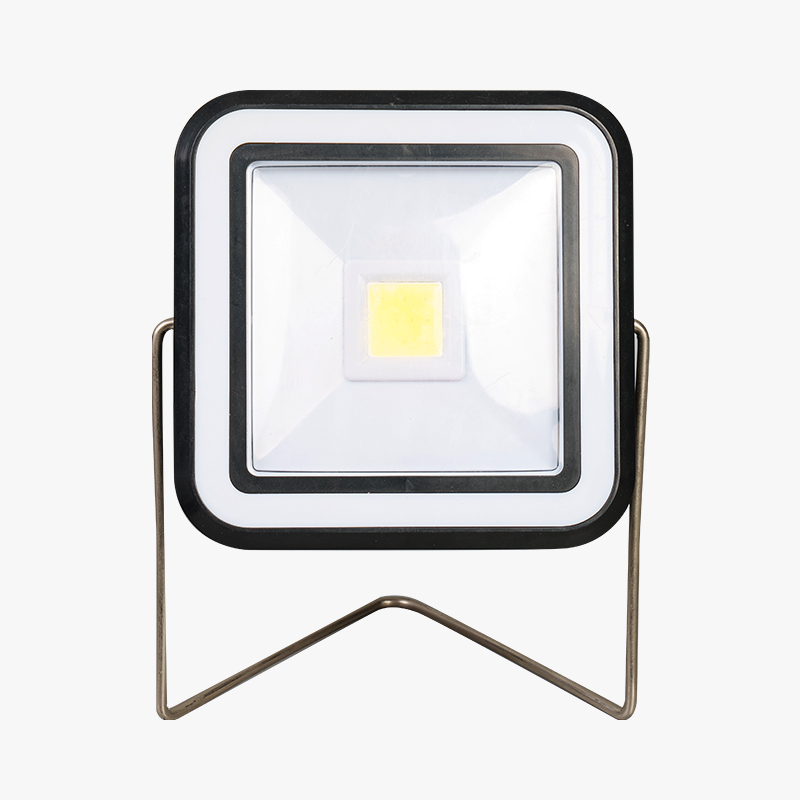
A solar working lamp is a system of four distinct components — solar panel, battery, LED, and charge controller circuit — each with its own lifespan. The overall lamp lifespan is determined by whichever component fails first:
The monocrystalline or polycrystalline silicon solar cells used in working lamps degrade slowly over time due to UV exposure and thermal cycling. High-quality solar panels are rated with a power degradation of 0.5–0.8% per year — meaning after 10 years, a quality panel will produce approximately 92–95% of its original output. After 20–25 years, most quality panels still function at 80% or above. In a working lamp context, this rate of degradation is essentially negligible for the lamp's practical lifespan.
More significant solar panel failure modes include physical damage (cracking from impact), delamination of the encapsulant (allowing moisture ingress), and corrosion of the solder joints under the glass. These typically occur over 8–15 years of outdoor exposure in good-quality panels. Budget panels with thinner glass, lower-quality encapsulant, and less robust frame sealing may delaminate or develop microcracks within 3–5 years.
The internal rechargeable battery is almost always the first component to reach end of useful life in a solar working lamp, and it is the factor that most directly determines how long the lamp will work reliably. All rechargeable batteries degrade over charge-discharge cycles, losing capacity with each cycle.
Solar working lamps use one of three battery chemistries, each with a distinct cycle life:
| Battery Type | Cycle Life (to 80% capacity) | Estimated Calendar Life (daily use) | Cold Temp. Performance | Common In |
|---|---|---|---|---|
| Lead-Acid (VRLA / AGM) | 200–500 cycles | 1–2 years | Moderate | Budget solar lanterns, older models |
| Nickel-Metal Hydride (NiMH) | 500–1,000 cycles | 1.5–3 years | Good | Mid-range portable lamps |
| Lithium-Ion (Li-Ion) | 300–500 cycles | 1–2 years (daily) | Moderate | Compact consumer lamps |
| Lithium Iron Phosphate (LFP) | 2,000–3,000+ cycles | 5–10 years | Excellent | Premium working lamps, professional grade |
The battery chemistry choice is the single most important factor in a solar working lamp's total lifespan. A lamp with a standard lithium-ion battery cycled daily will need a battery replacement in 1–2 years. The same lamp fitted with a lithium iron phosphate (LFP) battery can operate for 5–10 years on the same battery. When buying a solar working lamp for long-term or professional use, LFP battery chemistry is strongly recommended despite the higher upfront cost.
Quality LEDs used in solar working lamps are rated at 25,000 to 50,000 hours of operation (L70 standard — time to reach 70% of initial lumen output). At 8 hours of use per day, a 50,000-hour LED lasts approximately 17 years. The LED is essentially never the failure point in a well-designed solar working lamp during its practical service life. LED failure (complete failure rather than gradual dimming) before 10,000 hours typically indicates a manufacturing defect, excessive operating temperature, or voltage/current regulation failure in the driver circuit.
The charge controller manages the flow of current from the solar panel to the battery, prevents overcharging, and regulates output to the LED. In quality solar lamps, the controller uses low-power microcontrollers and MOSFET switches rated for 10,000+ hours of operation. Circuit failure is rare in well-designed units but can occur due to voltage spikes from the panel (particularly at noon with high irradiance), moisture ingress, or thermal stress from repeated heating and cooling. Premium solar working lamps with conformal-coated circuit boards and sealed housings (IP54 or higher) protect the circuit from the environmental factors most likely to cause early failure.
Understanding the charging requirement clarifies how reliably the lamp will be ready each evening and how the lamp performs in different geographic and seasonal conditions.
The charge time formula is: Charge Time (hours) = Battery Capacity (Wh) ÷ (Solar Panel Wattage × Solar Efficiency Factor). The solar efficiency factor accounts for angle of incidence, partial shading, temperature derating, and charge controller losses — typically 0.75–0.85 for real-world conditions.
In practice, most solar working lamps require 6–10 hours of direct sunlight for a full charge from empty. In geographic regions with 4–6 peak sun hours per day (most of the globe between latitudes 50°N and 50°S), a standard solar working lamp will reach a full charge from a partial state by end of day under clear conditions. Key variables affecting charging:
Temperature is the single most important environmental factor affecting how long a solar working lamp lasts. It affects both the per-charge runtime and the long-term lifespan of the battery.
All rechargeable battery chemistries lose usable capacity in cold temperatures. At 0°C (32°F), lithium-ion batteries typically deliver approximately 75–85% of their rated room-temperature capacity. At -10°C (14°F), this may fall to 60–70%, meaning the lamp will run for noticeably fewer hours per charge in winter. Lithium iron phosphate batteries perform significantly better in cold, maintaining approximately 80% of rated capacity at -20°C — a major advantage for northern-climate winter outdoor use. Cold weather also slows the charging rate: charging lithium batteries below 0°C can cause lithium plating on the anode, permanently reducing capacity, which is why quality solar lamp controllers include low-temperature charge protection that reduces or suspends charging at very low temperatures.
Heat is the greatest threat to rechargeable battery longevity. The commonly cited rule of thumb is that every 10°C increase in average storage temperature halves the battery's calendar lifespan. A lithium-ion battery with a 3-year calendar life at 20°C may degrade to an effective 1.5-year life when stored and operated at 30°C — a situation common for solar lamps left in hot outdoor environments or vehicles during summer.
For solar working lamps used in tropical climates, hot construction sites, or stored in vehicles in summer, choosing a lamp with LFP (lithium iron phosphate) chemistry is strongly recommended, as LFP batteries are significantly more thermally stable than Li-Ion and NiMH chemistries. LFP batteries maintain acceptable calendar life at operating temperatures up to 60°C where Li-Ion cells would degrade rapidly.
Solar working lamps used outdoors are exposed to rain, dew, and humidity. The IP (Ingress Protection) rating of the lamp determines how well it withstands moisture:
Moisture ingress into the circuit board or battery compartment is a leading cause of premature solar lamp failure. A lamp with an IP54 or higher rating will last significantly longer in outdoor environments than an unrated or IP20/IP44 model exposed to the same conditions. The sealing quality of cable entries, the solar panel junction box, and the lamp body joins are the most critical sealing points.
Nearly all solar working lamps offer multiple brightness settings. The choice of brightness mode has a dramatic effect on per-charge runtime — using low mode instead of high mode can extend runtime by 3 to 8 times, depending on the LED current reduction at each setting.
This is because LED light output is roughly proportional to current, but the relationship between current and brightness is not linear at very low levels — reducing current to 10% of maximum gives approximately 20–30% of maximum brightness, a much more efficient exchange. The following example illustrates the runtime impact for a mid-range solar working lamp:
| Mode | Output (Lumens) | Power Draw | Runtime per Full Charge | Best Application |
|---|---|---|---|---|
| High (100%) | 250–300 lm | 3W | 6–7 hours | Detail work, reading, inspection |
| Medium (50%) | 130–160 lm | 1.2W | 15–18 hours | General area lighting, campsite |
| Low (20%) | 50–70 lm | 0.4W | 40–50 hours | Ambient nightlight, extended outage |
| SOS / Strobe | Intermittent flash | ~0.5W avg | 35–45 hours | Emergency signal, safety marking |
The practical implication is significant for multi-day outdoor use or emergency applications: running at medium brightness extends one charge to cover 2–3 nights rather than just one, providing a buffer for cloudy days when the panel cannot fully recharge the battery before dusk.
The number of charge cycles a battery experiences per year directly determines how quickly it reaches end of useful life. A lamp used every single day will cycle the battery 365 times per year; a lamp used 3 nights per week will cycle it only about 150 times per year. This difference has a proportional effect on battery lifespan:
| Usage Frequency | Cycles Per Year | Li-Ion Battery Life (500 cycle rated) | LFP Battery Life (2,500 cycle rated) |
|---|---|---|---|
| Daily use (every night) | 365 | ~1.4 years | ~6.8 years |
| 4× per week | 208 | ~2.4 years | ~12 years |
| 3× per week | 156 | ~3.2 years | ~16 years |
| Occasional use (camping trips, outages) | 20–50 | 10–25 years (calendar life limits first) | 50+ years (calendar life limits first) |
For occasional-use lamps (emergency kits, camping equipment, seasonal outdoor lighting), cycle count is rarely the limiting factor — calendar aging limits the battery regardless of how few cycles it completes. Li-Ion and Li-polymer batteries age even when not being used, typically losing significant capacity within 3–5 years of manufacture even in storage due to electrolyte degradation. LFP batteries age more slowly in calendar terms as well, making them the preferred choice for infrequent-use emergency lamps that must remain reliable through long storage periods.
Recognizing battery degradation early allows for timely replacement before the lamp becomes unreliable at a critical moment. Watch for the following indicators:
With the right maintenance habits, a quality solar working lamp's effective lifespan can be extended significantly beyond the average. The following actions have the greatest impact:
Both solar working lamps and dry battery LED working lamps have distinct longevity profiles. The best choice depends on usage pattern and context:
| Factor | Solar Working Lamp | Dry Battery LED Lamp |
|---|---|---|
| Per-charge / per-set runtime | 6–12 hours (one night's use) | 8–130 hours (varies by battery size) |
| Ongoing cost of operation | Zero (sunlight is free) | Battery replacement cost (ongoing) |
| Device lifespan (before replacement needed) | 3–10 years (battery limits) | 5–15+ years (no internal battery to degrade) |
| Emergency readiness after long storage | Moderate (battery may self-discharge; needs sun to recharge) | Excellent (replace batteries; immediately ready) |
| Reliability without sunlight access | Limited (cloudy periods reduce charge) | Full (any time batteries available) |
| Best application | Regular outdoor use, off-grid settings, daily use with sun access | Emergency kits, indoor use, cloudy climates, winter use |
For regular, daily outdoor use in sun-accessible locations, a solar working lamp with an LFP battery is the most economical long-term choice — zero ongoing energy cost and sufficient battery lifespan for years of daily use. For infrequent emergency use, northern-climate winter applications, or situations where sunlight cannot be relied upon, the dry battery lamp's indefinite shelf life and guaranteed readiness make it the more dependable option.
When buying a solar working lamp, the following specifications and features directly predict how long it will last and how reliably it will serve you:
Your email address will not be published. Required fields are marked *

 Building E21, Wanyang Zhongchuang City, No. 555 Binhai Avenue, Binhai Economic Development Zone, Fenghua District, Ningbo City, Zhejiang Province
 0086-130-81920916
 [email protected]
Copyright ? Conbo Electronics Co., Ltd. All right reseved. Custom Led Lights Manufacturers Wholesale Outdoor Light Fixtures Factory