
 English
 Español
Product Consultation
Your email address will not be published. Required fields are marked *
The best places to install LED Motion Sensor Night Lights are hallways, staircases, bathrooms, bedrooms, and entryways — locations where people move through in low-light conditions and need immediate, hands-free illumination without waking others or fumbling for a switch. Beyond these core locations, the right placement within each space matters as much as the room itself. This guide covers both where to install and exactly how to position your units for maximum effectiveness and safety.
Content
Hallways are the most universally recommended installation location for motion sensor night lights, and for good reason. They are transition spaces used in darkness far more frequently than any other area of a home — during nighttime bathroom trips, early morning departures, and late arrivals. A hallway with no lighting is also a leading risk factor for falls.
According to the U.S. Centers for Disease Control and Prevention (CDC), over 36 million falls are reported among older adults in the United States each year, with a significant proportion occurring in low-light corridor and hallway environments. (Source: CDC, Falls Among Older Adults: An Overview, 2023)
Staircases are the highest-risk location in any home for nighttime falls. The combination of elevation changes, narrow treads, and complete darkness creates a dangerous environment for anyone moving through without light. LED Motion Sensor Night Lights are one of the most cost-effective safety interventions for this specific hazard.
The Royal Society for the Prevention of Accidents (RoSPA) identifies staircases as the location of approximately 60% of serious falls in the home, with the majority occurring during nighttime hours when overhead lights are not switched on. (Source: RoSPA, Home Safety Factsheet: Falls, 2022)
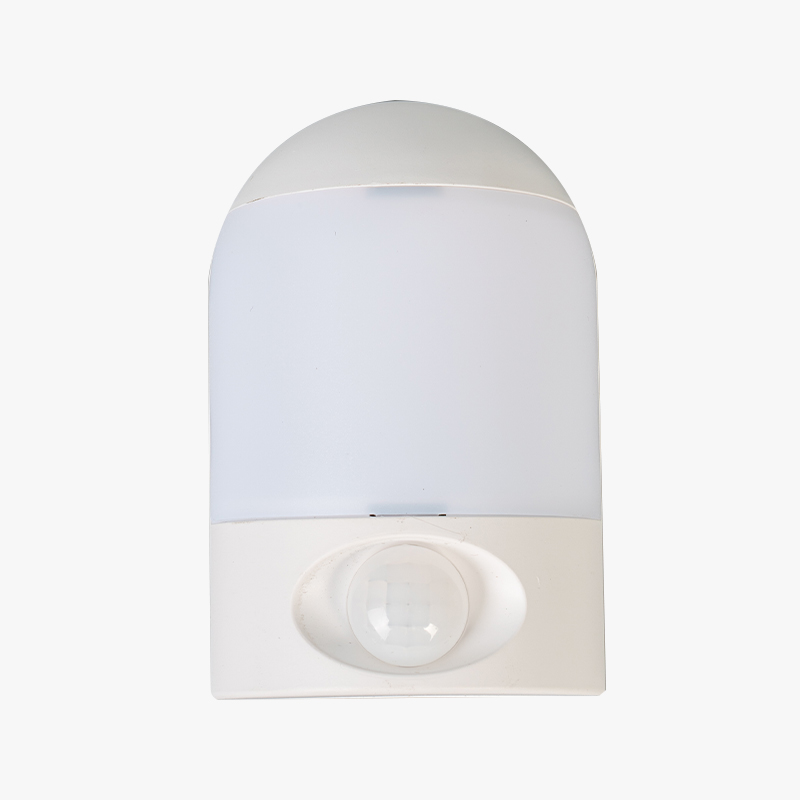
Bathrooms are visited an average of 1 to 2 times per night by adults over 40, and the full overhead light triggered during a nighttime visit is a well-documented disruptor of sleep quality. Bright light exposure at night suppresses melatonin production, making it harder to return to sleep after a bathroom visit. (Source: Harvard Medical School, Division of Sleep Medicine, Blue Light Has a Dark Side, 2020)
A low-level motion sensor night light provides enough illumination for safe navigation without the brightness that disrupts circadian rhythms.
Bedrooms benefit from motion sensor night lights in two specific sub-locations rather than central room placement:
A unit installed at low height near the side of the bed activates when someone gets up during the night, illuminating the floor path immediately. This is particularly valuable for older adults, young children who may stumble when waking, or anyone in an unfamiliar room layout. The light output should be below 50 lumens for bedside use — enough to navigate without triggering full wakefulness.
A second unit near the bedroom exit guides the occupant to the door and connects visually with the hallway light sequence. Placing it on the wall beside the door frame ensures it activates as the person approaches to leave rather than illuminating the entire room and disturbing a sleeping partner.
Entryways serve a dual purpose for motion sensor night lights: they provide illumination for residents arriving home after dark, and they contribute to home security by activating when movement is detected near entry points.
Research by the University of North Carolina Charlotte found that 60% of convicted burglars said the presence of lighting was a deterrent that influenced their decision to target a different property. Automatic sensor lighting — which activates unexpectedly — is specifically cited as more effective than static lighting that remains on all night. (Source: Researchers at UNC Charlotte Department of Criminal Justice and Criminology, Understanding Decisions to Burglarize from the Offender's Perspective, 2012)
Children who wake at night face disorientation in complete darkness, which can lead to falls, distress, or reluctance to use the bathroom independently. A low-output motion sensor night light provides enough guidance to allow safe movement without creating a dependency on full brightness that interferes with sleep.
Kitchens are visited at night more frequently than most people realize — for water, late-night snacks, or early morning preparation before others wake. A motion sensor night light in the kitchen eliminates the need to flood the space with overhead light during these visits.
| Location | Priority Level | Recommended Height | Key Consideration |
|---|---|---|---|
| Hallway | Essential | 30 to 45 cm from floor | One unit per 4 meters of length |
| Staircase | Essential | Top, mid, and bottom landings | Activate before first step is reached |
| Bathroom | High | Low, near door and toilet | IP44+ rating required; warm white preferred |
| Bedroom | High | Beside bed and near door | Below 50 lumens; avoid disturbing sleeping partner |
| Entryway | High | Knee to waist height | Security benefit; covers both entry and exit |
| Children's room | High | Baseboard to 30 cm | Below 10 lumens for nurseries |
| Kitchen | Recommended | Near entrance and sink | Keep away from heat sources |
Regardless of which room you are installing in, these principles maximize the effectiveness of any LED Motion Sensor Night Light:
The CBLamps LED Motion Sensor Night Lights feature an adjustable PIR sensor with selectable sensitivity and auto-off timer settings, making them well suited for all of the locations covered in this guide. Their compact plug-in design and low-glare output work equally well in hallways, bathrooms, staircases, and children's rooms without modification.
Your email address will not be published. Required fields are marked *

 Building E21, Wanyang Zhongchuang City, No. 555 Binhai Avenue, Binhai Economic Development Zone, Fenghua District, Ningbo City, Zhejiang Province
 0086-130-81920916
 [email protected]
Copyright ? Conbo Electronics Co., Ltd. All right reseved. Custom Led Lights Manufacturers Wholesale Outdoor Light Fixtures Factory