
 English
 Español
Product Consultation
Your email address will not be published. Required fields are marked *
Most LED Motion Sensor Night Lights have a lifespan of 25,000 to 50,000 hours of active LED operation. Under typical home use — where the motion sensor triggers the light for short bursts rather than keeping it on continuously — this translates to a practical service life of 10 to 25 years in most households. However, real-world lifespan depends heavily on build quality, sensor type, installation environment, and usage patterns. Understanding these factors helps you choose a light that genuinely lasts.
Content
LED lifespan is rated in hours to L70 — the point at which the light output drops to 70% of its original brightness. This is the industry-standard threshold defined by the Illuminating Engineering Society (IES) LM-80 test method, which measures lumen depreciation over time. (Source: IES LM-80-15, Approved Method for Measuring Lumen Maintenance of LED Light Sources)
A rating of 25,000 hours does not mean the light stops working at that point. It means brightness will have reduced to 70% of its original output. Many LEDs continue to function well beyond this threshold, just at reduced intensity.
For a motion sensor night light used in a hallway or bathroom, consider a realistic usage model:
| Daily Active Use | LED Rating | Estimated Lifespan |
|---|---|---|
| 30 minutes per day | 25,000 hours | Approx. 136 years |
| 2 hours per day | 25,000 hours | Approx. 34 years |
| 6 hours per day | 25,000 hours | Approx. 11 years |
| 2 hours per day | 50,000 hours | Approx. 68 years |
| 6 hours per day | 50,000 hours | Approx. 23 years |
In practice, the motion sensor limits active illumination to short triggered bursts — often 20 to 90 seconds — which dramatically extends how long the LED chip itself lasts compared to a continuously-on light fixture.
The LED chip is rarely the first component to fail. In most real-world cases, the motion sensor unit, the power supply, or the housing degrade before the LED itself reaches its rated hours. Here is what limits lifespan in practice:
Most LED Motion Sensor Night Lights use a Passive Infrared (PIR) sensor to detect body heat and trigger the light. PIR sensors are rated for 100,000 trigger cycles or more in quality units, which is well beyond the LED's useful life under normal use. However, cheap sensors in low-cost units may fail at 10,000 to 30,000 cycles — equivalent to just 3 to 8 years of regular hallway use. (Source: Murata Manufacturing Co., PIR Sensor Application Notes, 2020)
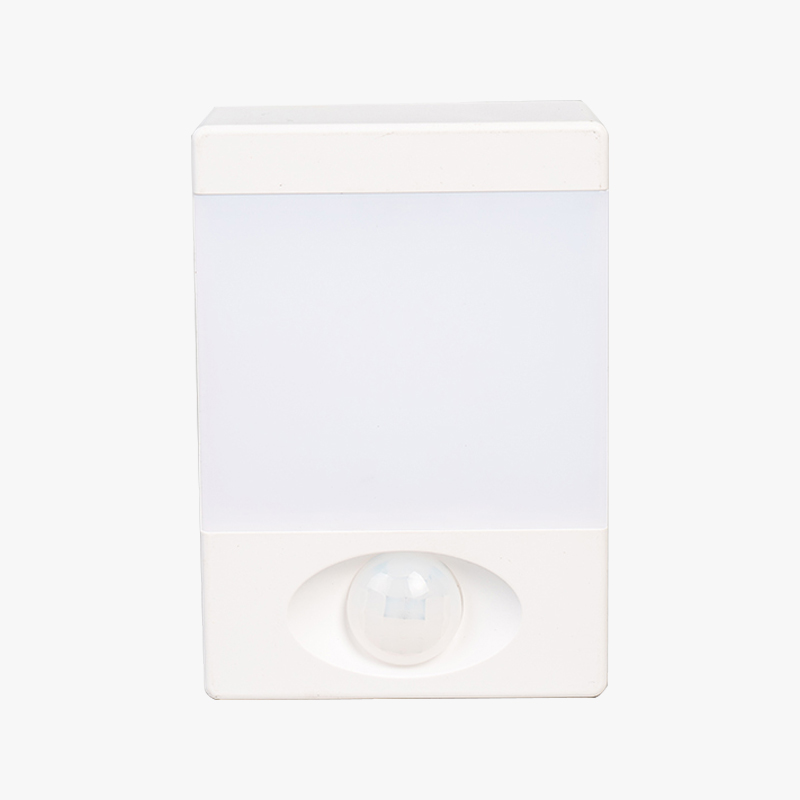
The LED driver — the electronic circuit that converts mains or battery power into the correct current for the LED — is the most common point of failure in plug-in night lights. Electrolytic capacitors in the driver circuit have a rated life of 5,000 to 15,000 hours at operating temperature. In environments with higher ambient temperatures (above 40 degrees Celsius), this can shorten to 2 to 5 years. This is why cheap plug-in night lights often fail at the circuitry level while the LED chip itself remains functional. (Source: Nichicon Corporation, General Description of Electrolytic Capacitors, Technical Notes)
Heat is the primary enemy of LED longevity. For every 10 degrees Celsius rise in LED junction temperature above its rated operating point, LED lifespan roughly halves. (Source: U.S. Department of Energy, Solid-State Lighting R&D Plan, 2019)
This means:
For battery-operated motion sensor night lights, the limiting factor is often the battery chemistry rather than the LED or sensor. Alkaline AA batteries in a typical sensor night light last 3 to 6 months under average use. Lithium batteries extend this to 12 to 18 months. Rechargeable NiMH batteries offer the lowest running cost but may degrade after 500 to 1,000 charge cycles — approximately 5 to 10 years of regular use. (Source: Battery University, BU-201, How does the Lead Acid Battery Work?, Cadex Electronics)
The installation type significantly affects total service life:
| Factor | Plug-In Motion Sensor Night Light | Battery-Powered Motion Sensor Night Light |
|---|---|---|
| LED lifespan | 25,000 to 50,000 hours rated | 25,000 to 50,000 hours rated |
| Primary failure point | Driver circuit / capacitors | Battery chemistry degradation |
| Typical practical lifespan | 5 to 15 years (circuit dependent) | 3 to 10 years (battery replaced periodically) |
| Maintenance required | None to minimal | Battery replacement every 3 to 18 months |
| Effect of heat | High - shortens circuit and LED life | Medium - affects battery capacity mainly |
| Best installation location | Hallways, bedrooms, living areas | Closets, cabinets, stairs, outdoor areas |
Plug-in models from quality manufacturers consistently achieve longer overall service life because they eliminate the battery degradation variable entirely, provided the driver circuit is properly engineered for long-term operation.
Knowing when a unit is failing helps you replace it before it stops working at a critical moment. Watch for these indicators:
Regardless of the unit you choose, these practices extend service life measurably:
When selecting LED Motion Sensor Night Lights built for longevity, prioritize these specifications:
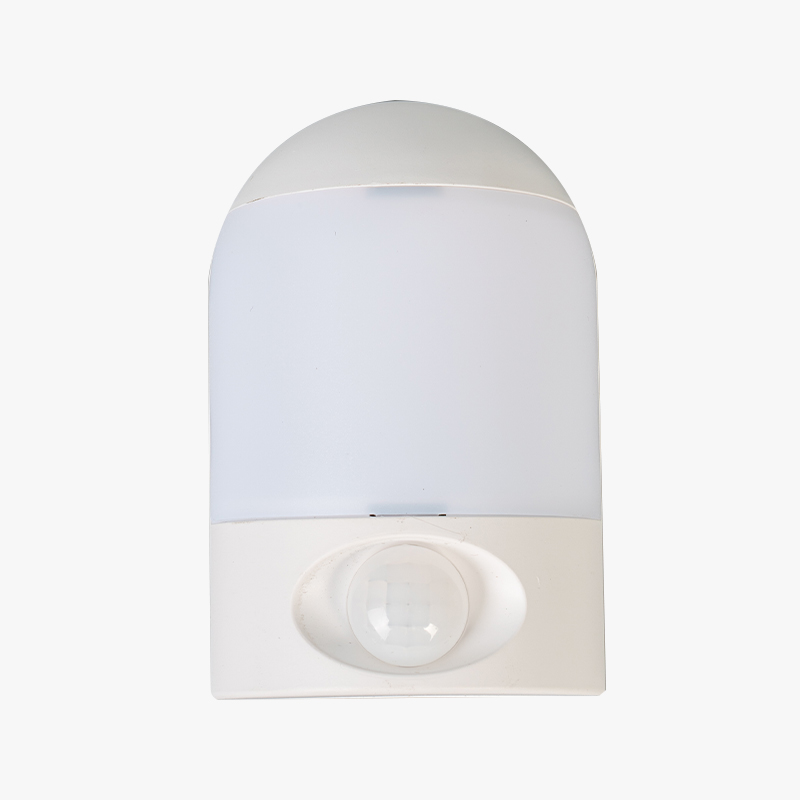
The CBLamps LED Motion Sensor Night Lights are engineered with high-efficiency LED chips, quality driver circuits, and PIR sensors built for consistent long-term performance. They are designed to meet the specifications above — making them a reliable choice for hallways, bedrooms, bathrooms, and staircases where dependable, energy-efficient illumination is needed night after night.
| Component | Rated Lifespan | Real-World Lifespan |
|---|---|---|
| LED chip | 25,000 to 50,000 hours | 10 to 25+ years (motion-triggered use) |
| PIR motion sensor | 100,000+ trigger cycles (quality units) | 10 to 20+ years typical home use |
| Driver circuit (plug-in) | 5,000 to 15,000 hours capacitor life | 5 to 15 years depending on heat exposure |
| Alkaline batteries (battery models) | N/A (consumable) | 3 to 6 months per set |
| Rechargeable NiMH battery | 500 to 1,000 charge cycles | 5 to 10 years with regular recharging |
| Overall unit lifespan | Determined by weakest component | 5 to 25 years depending on build quality |
The practical conclusion: a quality LED Motion Sensor Night Light from a reputable manufacturer should last well over a decade in normal use. The difference between a 3-year unit and a 15-year unit comes down almost entirely to the quality of the driver circuit, the sensor component, and how well heat is managed in the housing design.
Your email address will not be published. Required fields are marked *

 Building E21, Wanyang Zhongchuang City, No. 555 Binhai Avenue, Binhai Economic Development Zone, Fenghua District, Ningbo City, Zhejiang Province
 0086-130-81920916
 [email protected]
Copyright ? Conbo Electronics Co., Ltd. All right reseved. Custom Led Lights Manufacturers Wholesale Outdoor Light Fixtures Factory