
 English
 Español
Product Consultation
Your email address will not be published. Required fields are marked *
A Sensor Night Light does not strictly work only at nighttime. It responds to ambient light levels, not the actual time of day. When the surrounding light drops below a set threshold, the sensor triggers the light to turn on automatically. This means it can activate in a dark closet at noon, during a power outage on a sunny afternoon, or in a windowless bathroom at any hour. The "night" in the name refers to its primary use case, not a time-locked function.
That said, under normal household conditions, darkness and nighttime do coincide, so most users experience the light activating consistently after sunset and switching off after sunrise, which reinforces the common assumption.
Content
The core component inside most sensor night lights is a photoresistor, also called a Light Dependent Resistor (LDR). This is a semiconductor device whose electrical resistance decreases as light intensity increases. When the room is bright, resistance is high and the circuit remains open, keeping the light off. When darkness falls and resistance drops, the circuit closes and the light switches on.
A standard photoresistor used in consumer night lights typically responds to illuminance levels between 1 lux and 10 lux as the trigger threshold (source: Vishay Semiconductors LDR Datasheet, Series VT90). For reference:
| Environment | Approximate Illuminance |
| Direct sunlight | 100,000 lux |
| Well lit office | 300 to 500 lux |
| Living room in evening | 50 to 150 lux |
| Hallway at night with door closed | 1 to 10 lux |
| Completely dark room | 0 lux |
This means a sensor night light placed near a lamp or television may not activate at all in the evening, even though it is technically dark outside, because local light sources keep the lux level high enough to suppress triggering.
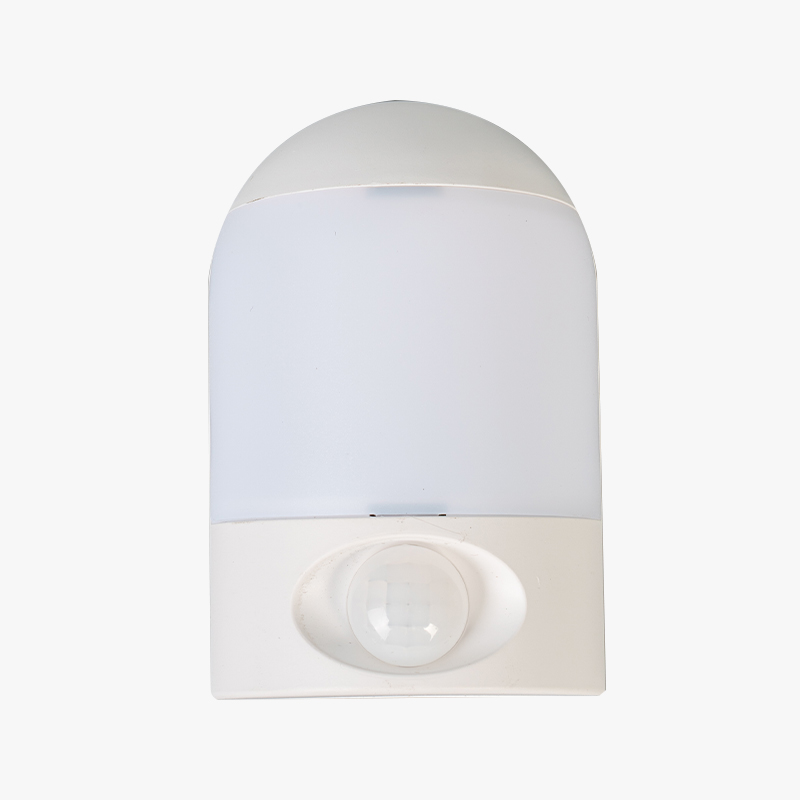
Some sensor night lights combine a photoresistor with a PIR (Passive Infrared) motion sensor. In these dual-sensor models, the light will only activate when two conditions are met simultaneously: it is dark enough AND motion is detected. This design significantly extends bulb lifespan and reduces energy waste. For example, a hallway unit with dual sensors will stay off even in darkness unless someone walks past, making it far more practical than a simple always-on dusk-to-dawn model.
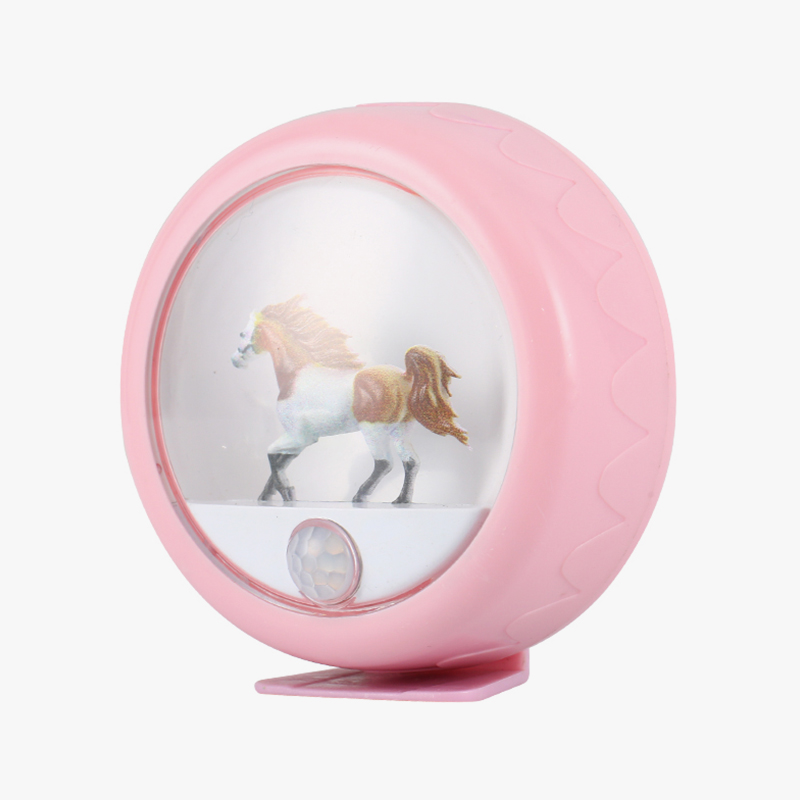
Not all sensor night lights behave the same way. Understanding the three main types helps you choose the right one for each room.
| Type | Trigger Condition | Best Used In |
| Dusk to Dawn (LDR only) | Ambient light drops below threshold | Outdoor pathways, stairwells, plug-in corridor lights |
| Motion Activated (PIR only) | Movement detected within range | Garages, storage rooms, outdoor entrances |
| Dual Sensor (LDR + PIR) | Dark AND motion detected together | Bedrooms, hallways, bathrooms, children's rooms |
According to the U.S. Department of Energy (energy.gov), motion-sensor lighting can reduce energy use by up to 30 percent compared to lights left on all night. Dual sensor models deliver even better savings because they eliminate the background-on time entirely.
Because the sensor reacts to light levels rather than a clock, there are several real-world daytime scenarios where it will switch on automatically:
Many modern sensor night lights include a sensitivity adjustment dial or switch that allows you to raise or lower the lux threshold at which the sensor triggers. A higher sensitivity setting means the light turns on even in relatively dim but not fully dark conditions, while a lower sensitivity setting requires near-complete darkness before activation.
Consider a bedroom where you use blackout curtains. At high sensitivity, the sensor night light may activate whenever the curtains are drawn, even in the afternoon. By reducing the sensitivity, you can ensure it only responds to genuine nighttime darkness once the curtains are closed and the main room light is also off.
For children's rooms specifically, a slightly higher sensitivity setting is often recommended. Research published in the journal Sleep Medicine Reviews (2015, Vol. 23) found that children exposed to dim light before sleep fell asleep an average of 20 minutes faster when a low-level ambient light source was available compared to complete darkness. A well-calibrated sensor night light supports this without staying on unnecessarily during the day.
Modern sensor night lights typically use LED bulbs rated between 0.3W and 2W. Even if a unit runs 24 hours a day in a dark interior space, the annual energy cost is minimal. For example:
The takeaway is that a well-designed low-wattage sensor LED night light is extremely economical regardless of how many hours it runs.
The best sensor night light for your situation depends on four practical factors: the natural light conditions of the room, whether motion detection is needed, the desired brightness level, and the physical installation method.
For spaces with windows, a standard LDR dusk-to-dawn sensor works well. The sensor naturally follows the outdoor light cycle. A dual LDR and PIR model is even better if you want it to only illuminate when someone actually enters the room at night.
For spaces without natural light, a pure PIR motion-sensor model is more logical than an LDR model. Since the LDR would trigger continuously in the dark, combining it with PIR ensures the light only activates when needed.
Low-brightness, warm-tone LED units with a soft glow of around 5 to 15 lumens are ideal. Avoid units with a blue-white color temperature above 4000K, as blue-spectrum light is known to suppress melatonin production (source: Harvard Health Publishing, "Blue light has a dark side," 2020).
The Sensor Night Light range from CB Lamps covers all three use cases, offering plug-in models with adjustable sensitivity and both single LDR and dual LDR plus PIR configurations. Each unit uses energy-efficient LED technology and is designed to meet standard household safety certifications, making them a practical choice for bedrooms, hallways, and interior utility spaces alike.
This is actually true and intentional. If a nearby lamp keeps local lux levels above the threshold, the sensor correctly interprets the environment as sufficiently lit and stays off. This is a feature, not a fault. If you want the night light to activate regardless, switch off other light sources first or choose a model with a manual override.
The standby draw of most LDR sensor circuits is under 0.1W, which is negligible. You do not need to unplug the unit during the day to save meaningful energy.
Quality LED-based sensor night lights have rated lifespans of 25,000 hours or more (source: ENERGY STAR LED Lighting Specification, Version 2.1). Even running 16 hours per day, that translates to over 4 years before the LED reaches its half-brightness point. LDR sensors themselves have virtually unlimited cycle life under normal operating conditions.
To bring everything together clearly:
If you are looking for a reliable and energy-efficient option, the Sensor Night Light collection at CB Lamps provides a well-rounded selection suitable for diverse indoor environments, from nurseries to utility corridors.
Your email address will not be published. Required fields are marked *

 Building E21, Wanyang Zhongchuang City, No. 555 Binhai Avenue, Binhai Economic Development Zone, Fenghua District, Ningbo City, Zhejiang Province
 0086-130-81920916
 [email protected]
Copyright ? Conbo Electronics Co., Ltd. All right reseved. Custom Led Lights Manufacturers Wholesale Outdoor Light Fixtures Factory