
 English
 Español
Product Consultation
Your email address will not be published. Required fields are marked *
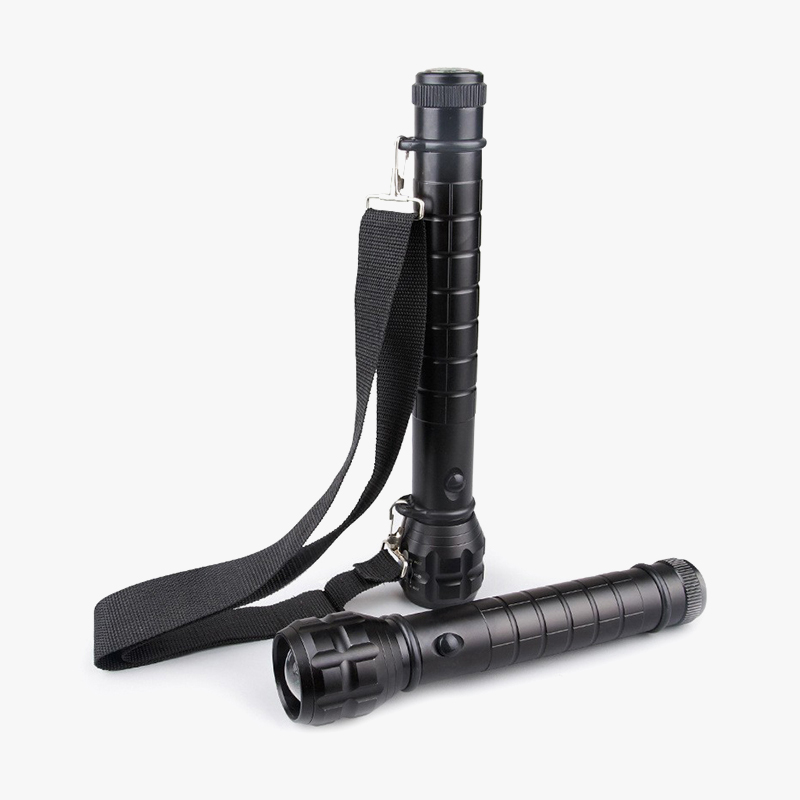
A LED dry battery working lamp typically runs for 8 to 48 hours on a single set of batteries, depending on the number and type of batteries installed, the LED wattage, and whether the lamp is used on high or low brightness settings. At the low end, a small single-AA-battery LED work light with a bright 1W LED may last only 6–10 hours. At the high end, a multi-D-cell battery work lamp running a 0.5W energy-efficient LED at partial brightness can easily exceed 40–60 hours per battery set. Because the batteries are replaceable, the lamp's useful lifespan as a device — meaning how long it functions before parts fail — can extend to 5 years or more, far outlasting the LED lifespan (rated at 25,000–50,000 hours in quality units).
Understanding both the per-charge runtime (how long one set of batteries lasts) and the overall device lifespan (how long the lamp itself functions reliably) helps you plan for camping trips, emergency kits, job site lighting, and outdoor use. This article covers both dimensions in detail, with specific data for common battery and LED configurations.
Content
The runtime per battery set is determined by a simple relationship: Battery Capacity (mAh) ÷ LED Current Draw (mA) = Runtime (hours). However, in practice, voltage drop as batteries discharge means the LED dims toward the end of the battery's life before reaching total cutoff, and circuit efficiency losses reduce actual runtime below the theoretical maximum by 10–20%.
The following table shows typical runtimes for common battery-LED combinations found in dry battery working lamps:
| Battery Configuration | Total Capacity | LED Power | LED Current Draw | Estimated Runtime | Typical Application |
|---|---|---|---|---|---|
| 1× AA (1.5V) | ~2,500 mAh | 0.3W LED | ~200 mA | 8–12 hours | Compact clip-on task light, reading light |
| 3× AA (4.5V) | ~2,500 mAh | 1W LED | ~220 mA | 10–14 hours | Small camping lantern, work area light |
| 4× AA (6V) | ~2,500 mAh | 1–3W LED | 170–500 mA | 5–15 hours | Portable work lamp, garage light |
| 3× C (4.5V) | ~7,500 mAh | 1W LED | ~220 mA | 28–35 hours | Extended camping, emergency shelter lighting |
| 4× D (6V) | ~50,000 mAh | 3W LED | ~500 mA | 80–100 hours | Heavy-duty site work lamp, flood-style work light |
| 6× D (9V) | ~75,000 mAh | 5W multi-LED array | ~555 mA | 100–130 hours | Professional inspection light, extended outage lamp |
| 9V block battery | ~550 mAh | 0.5W LED | ~55 mA | 8–10 hours | Compact utility light, sensor-activated emergency light |
The key insight from this data is that D-cell batteries offer dramatically longer runtimes than AA or AAA cells because of their much larger capacity — a single alkaline D cell contains approximately 12,000–18,000 mAh, compared to 2,400–3,000 mAh for an AA cell. When longevity per battery set is critical (emergency preparedness, extended outdoor work), lamps using C or D cells are the practical choice.
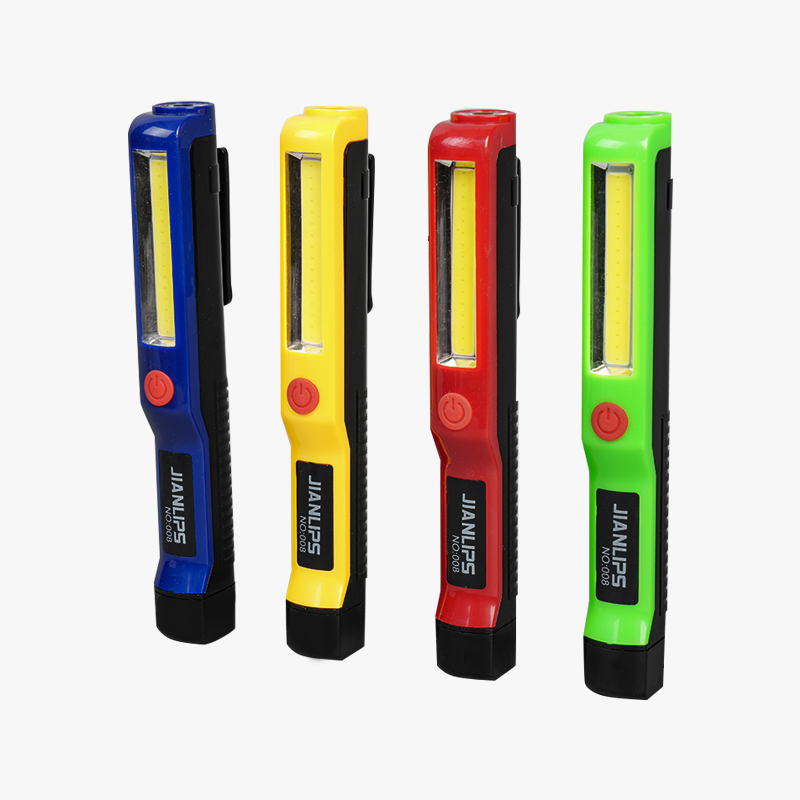
Dry battery working lamps are designed to accept standard dry-cell batteries, but not all dry batteries are equal in capacity, temperature performance, or shelf life. Choosing the right battery type for your lamp significantly affects actual runtime:
Standard alkaline batteries (the most widely sold dry battery type worldwide) provide a good balance of capacity, cost, and availability. An AA alkaline cell delivers approximately 2,400–3,000 mAh at normal temperatures. Performance drops noticeably at temperatures below 0°C — at -10°C, an alkaline battery may deliver only 60–70% of its rated capacity. Shelf life for alkaline batteries is excellent: 5–10 years in storage with less than 20% capacity loss, making them ideal for emergency kit lamps that may sit unused for years before being needed.
Lithium iron disulfide (LiFeS₂) batteries — sold as standard AA or AAA size replacements — offer 3,000–3,500 mAh capacity, approximately 30–40% more than alkaline cells of the same size. More importantly, lithium dry batteries maintain their performance at temperatures down to -40°C, making them the correct choice for cold-climate outdoor work, winter camping, and emergency kits in cold regions. They also weigh approximately 33% less than alkaline equivalents — a meaningful consideration for portable lamps carried in packs. Their shelf life of 10–20 years is the longest available in the dry battery category. The trade-off is cost: lithium dry batteries typically cost 3–5× more per cell than equivalent alkaline batteries.
Carbon-zinc batteries (sometimes labeled as "heavy duty" or "extra heavy duty") are the original dry battery technology and remain inexpensive and widely available. However, their capacity is significantly lower than alkaline equivalents — an AA carbon-zinc cell provides approximately 1,000–1,500 mAh, roughly half the capacity of a quality alkaline cell. This means carbon-zinc batteries will run an identical LED lamp for approximately half as long per set. Their shelf life is also shorter (3–5 years), and their performance in cold temperatures is the poorest of the three types. For frequent-use working lamps or emergency preparedness, carbon-zinc batteries are the least cost-effective choice despite their low unit price.
| Battery Type | Typical AA Capacity | Cold Weather Performance | Shelf Life | Relative Cost | Best For |
|---|---|---|---|---|---|
| Alkaline | 2,400–3,000 mAh | Moderate (drops at 0°C and below) | 5–10 years | Low–Moderate | General use, emergency kits |
| Lithium (LiFeS₂) | 3,000–3,500 mAh | Excellent (to -40°C) | 10–20 years | High | Cold climates, long-term storage, critical applications |
| Carbon-Zinc | 1,000–1,500 mAh | Poor | 3–5 years | Very Low | Light-use, warm climates only, short-term |
The LED light source is one of the most durable components in a dry battery working lamp. Quality LEDs used in working lamps are rated at 25,000 to 50,000 hours of operation before reaching 70% of initial lumen output (the industry-standard L70 rating). At a usage rate of 4 hours per day, a 50,000-hour LED would last over 34 years — far longer than any other component of the lamp.
In practice, for a battery-powered working lamp used in outdoor or emergency contexts, the LED itself is rarely the failure point. More common failure causes over time include:
With proper battery management (removing batteries when storing the lamp for more than 30 days), a quality LED dry battery working lamp can realistically provide 5–15 years of reliable service before any component failure requires replacement.
Many LED dry battery working lamps include multiple brightness levels — typically high, medium, and low — as well as a strobe or SOS mode. The relationship between brightness and battery runtime is direct and significant:
The following example illustrates how brightness mode choice affects real-world runtime on a typical 3×AA LED working lamp with a 3W maximum output LED:
| Mode | Light Output (Lumens) | Current Draw | Estimated Runtime | Best Use Case |
|---|---|---|---|---|
| High | 250–300 lm | 650 mA | 3.5–4 hours | Detail work, reading, close inspection |
| Medium | 120–150 lm | 250 mA | 9–11 hours | General area lighting, campsite use |
| Low | 30–50 lm | 65 mA | 35–45 hours | Ambient nightlight, extended outage, conservation |
| Strobe | Intermittent flash | ~80 mA average | 28–35 hours | Emergency signaling, safety marking |
Temperature is one of the most significant and often overlooked factors affecting dry battery runtime in working lamps. Battery performance is fundamentally a chemical reaction, and all chemical reactions slow down at lower temperatures and speed up at higher temperatures.
Alkaline batteries suffer significant capacity loss in cold conditions. At 0°C (32°F), an alkaline battery delivers approximately 80–85% of its room-temperature capacity. At -10°C (14°F), this drops to approximately 60–70%. At -20°C (-4°F), alkaline performance may fall below 50% of rated capacity, and at -30°C, the battery may fail to power a lamp at all. This is critically important for outdoor winter work, cold storage inspections, or northern climate emergency preparedness. In these applications, lithium dry batteries (LiFeS₂) are strongly recommended — they maintain over 90% of rated capacity at -20°C and function adequately down to -40°C.
A practical mitigation for cold-weather use with alkaline batteries is to carry spare batteries in an inner jacket pocket close to body heat, then swap them into the lamp when needed. The warmed batteries will perform close to their rated capacity.
At high temperatures (above 40°C / 104°F), alkaline batteries self-discharge faster, which is primarily a concern for storage rather than active use. A battery stored at 40°C may lose 2–3× more capacity per year than one stored at 20°C. For working lamps stored in hot vehicles or outdoor storage boxes, this reduces the effective shelf life of batteries left in the lamp between uses. The LEDs themselves are also affected by heat — elevated LED junction temperature reduces both efficiency and lifespan, though in a battery-powered context the relatively low LED wattage typically keeps junction temperatures within acceptable limits even in hot conditions.
Beyond battery runtime, the full service life of a LED dry battery working lamp as a device — meaning how many years it can function reliably before components fail — is a key consideration for purchasing decisions, especially for professional or emergency use.
The dry battery design gives these lamps an inherent durability advantage: the power source is external and replaceable. Unlike rechargeable lamps where the built-in lithium-ion or NiMH battery degrades over charge cycles (typically 300–500 cycles to 80% capacity), a dry battery lamp never experiences battery cell degradation. The lamp is effectively ready to use as long as fresh batteries are available — even after years of storage.
| Quality Grade | Typical LED Rating | Housing Material | IP Rating | Expected Device Lifespan |
|---|---|---|---|---|
| Budget / entry-level | 10,000–20,000 hrs | Thin ABS plastic | None or IPX2 | 1–3 years |
| Mid-range consumer | 25,000–35,000 hrs | Reinforced ABS / PC | IPX4 | 3–7 years |
| Professional / commercial | 50,000+ hrs | Rubber-armored / aluminum | IP54–IP65 | 8–15+ years |
Professional-grade working lamps with rubber-armored housings, sealed lens assemblies, and corrosion-resistant battery contacts are designed to survive the physical abuse of construction sites, automotive workshops, and emergency response kits. Their higher upfront cost is offset by the substantially longer service life and reduced replacement frequency.
Matching your lamp's expected use pattern to its battery configuration helps you choose the right product and plan your battery supply. The following examples show how long typical battery-powered working lamps last in real-world scenarios:
A 3-night camping trip typically requires approximately 4–6 hours of active light use per evening (2–3 hours cooking and socializing, 1–2 hours reading in tent). A 3×AA LED camp lamp running at medium brightness (approximately 120 lumens, 250 mA draw) will use about 1,500–2,000 mAh per evening, requiring a full set of alkaline AAs approximately every 1.5 nights. Upgrading to 3×C or 2×D cell configuration can extend runtime to cover the entire 3-night trip on a single battery set with capacity to spare. Carrying one spare set of AAs is the common solution for AA-powered lamps on multi-day trips.
Power outages from storms, grid failures, or natural disasters may last anywhere from a few hours to several days. For emergency use, a D-cell LED working lamp is the most appropriate choice. A 4×D battery lamp running a 2W LED at medium brightness provides approximately 40–60 hours of light — enough to cover a 3–5 day outage (at 8–10 hours use per day) on a single battery set. At low brightness (useful for nighttime orientation light rather than task work), the same lamp may extend to 120–150 hours. Emergency preparedness recommendations generally suggest maintaining a supply of fresh D-cell batteries for exactly this application, replacing them annually to maintain shelf-fresh capacity.
Mechanics and tradespeople using a dry battery working lamp for under-hood or under-cabinet inspection work typically use the lamp in short, intensive sessions — 15–60 minutes at a time on maximum brightness. At 30 minutes per use on a lamp drawing 500 mA, a 4×AA set provides approximately 5 hours of use or about 10 inspection sessions. A more economical approach for regular professional use is a 4×D lamp that provides the same brightness for 25–30 hours — 50+ sessions per battery set. Alternatively, a working lamp that accepts both a battery tray and an optional AC adapter gives the flexibility of corded use when power is available (conserving batteries) and battery use in unpowered locations.
Remote construction work — fencing, outbuilding construction, underground utility work — requires reliable lighting when working in confined or unlit spaces. An LED dry battery working lamp with a hook, magnetic mount, or adjustable stand allows hands-free positioning wherever needed. For full-day site work of 8–10 hours requiring continuous illumination, a 6×D battery configuration with a 3W LED provides a single continuous day of high-brightness work lighting before battery replacement. Carrying one spare set of D batteries supports two days of continuous use in the field without requiring electrical infrastructure.
Several practical steps can significantly extend both per-set runtime and the overall service life of batteries used in LED working lamps:
Many buyers considering a dry battery working lamp wonder whether a rechargeable LED lamp would be a better long-term choice. The comparison reveals that each has distinct advantages depending on the use context:
| Factor | Dry Battery LED Lamp | Rechargeable LED Lamp |
|---|---|---|
| Power availability | Any location with battery availability | Requires charging access (USB, AC outlet) |
| Battery lifespan (device) | Unlimited (replace batteries) | 300–500 charge cycles (built-in cell degrades) |
| Emergency readiness (long storage) | Excellent (fresh batteries always ready) | Moderate (battery may self-discharge if not maintained) |
| Long-term running cost | Higher (ongoing battery purchase) | Lower (electricity cost only) |
| Cold weather performance | Excellent with lithium batteries | Li-ion cells degrade faster in cold; capacity reduces significantly |
| Upfront cost | Low | Moderate to High |
| Environmental impact | Higher (disposable battery waste) | Lower for regular users |
| Best use scenario | Emergency kits, remote work, outdoor use, no power access | Daily professional use with regular charging access |
The conclusion is that dry battery working lamps have a clear and durable advantage in situations where power infrastructure cannot be relied upon: emergency preparedness, prolonged power outages, remote outdoor work, and international travel to areas with unreliable electricity. For daily professional workshop or site use where the lamp will be charged regularly, a rechargeable model typically offers better long-term economics. Many professional users maintain both types — a rechargeable lamp for regular daily use and a dry battery lamp for emergency kit and remote site use.
Recognizing when a battery set is reaching end of useful life in a LED working lamp helps avoid situations where the lamp fails when most needed:
Your email address will not be published. Required fields are marked *

 Building E21, Wanyang Zhongchuang City, No. 555 Binhai Avenue, Binhai Economic Development Zone, Fenghua District, Ningbo City, Zhejiang Province
 0086-130-81920916
 [email protected]
Copyright ? Conbo Electronics Co., Ltd. All right reseved. Custom Led Lights Manufacturers Wholesale Outdoor Light Fixtures Factory