
 English
 Español
Product Consultation
Your email address will not be published. Required fields are marked *
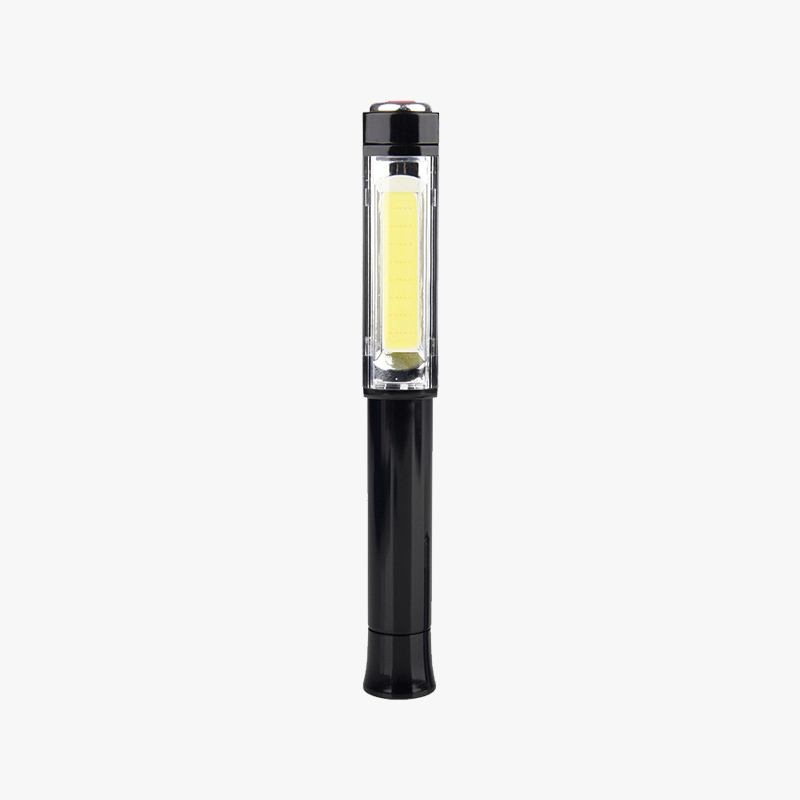
A dry battery working lamp operates on a straightforward closed electrical circuit principle: one or more dry cell batteries supply direct current (DC) voltage through a switch to a light source — typically an LED bulb or an incandescent bulb — which converts that electrical energy into light. When the switch is closed, current flows from the battery's negative terminal, through the circuit and the bulb, and back to the positive terminal, completing the circuit and producing illumination. When the switch is opened, the circuit is broken and the light goes out. No external power supply, wiring infrastructure, or transformers are required — the entire energy system is self-contained within the lamp's battery compartment.
Content
A dry battery working lamp consists of three functional components that work together to produce light:
The battery is the lamp's self-contained power source. A dry cell battery generates electrical energy through an electrochemical reaction between a metal anode (typically zinc), a cathode (manganese dioxide in alkaline cells), and an electrolyte paste — the "dry" in the name refers to this paste-form electrolyte, as opposed to the liquid electrolyte used in older wet cell batteries. The reaction releases electrons at the anode, creating a potential difference (voltage) that drives current through the circuit when it is closed.
Common battery configurations in working lamps include:
The switch is a mechanical or electronic device that opens and closes the electrical circuit between the battery and the light source. In its simplest form — a slide or push-button switch — it physically connects or disconnects a conductor in the circuit. Some dry battery working lamps include multi-position switches that offer different brightness levels by connecting different numbers of LED elements or by activating a simple resistor in series with the circuit to reduce current flow and dim the output.
Modern dry battery working lamps use LED light sources almost exclusively, having replaced incandescent bulbs in all but legacy designs. LEDs convert electrical energy to light with an efficiency of approximately 80–95% — compared to around 5–10% for incandescent filament bulbs, which waste the majority of their energy as heat. In a battery-powered application where energy capacity is finite, this efficiency difference is critical: an LED lamp running on the same battery set lasts 10–20 times longer per charge than the equivalent incandescent version.
The dry cell battery converts stored chemical energy into electrical energy through an oxidation-reduction (redox) reaction. In an alkaline AA cell, the reaction proceeds as follows:
As the reaction proceeds, the zinc anode is gradually consumed and the voltage output of the battery slowly drops. When the voltage falls below the minimum operating voltage of the light source (typically around 0.8–1.0V per cell), the lamp dims and eventually stops producing useful light — indicating that battery replacement is needed.
| Battery Type | Voltage (AA) | Typical Capacity (AA) | Best Use |
|---|---|---|---|
| Alkaline | 1.5V | 2,700–3,000 mAh | General use, good shelf life (5–10 years) |
| Zinc-carbon | 1.5V | 1,000–1,500 mAh | Low-drain, budget applications |
| Lithium (non-rechargeable) | 1.5V | 3,000–3,500 mAh | Extreme temperatures, emergency kits |
The self-contained, mains-independent nature of the dry battery working lamp's operating principle makes it specifically suited to environments where external power is unavailable, unreliable, or impractical:
The lamp's service life is effectively extended indefinitely by simply replacing the dry cells when depleted — no specialist tools, charging infrastructure, or technical knowledge is required. This replaceability distinguishes dry battery lamps from rechargeable alternatives and makes them a uniquely practical choice for infrequent-use emergency and backup lighting applications.
Your email address will not be published. Required fields are marked *

 Building E21, Wanyang Zhongchuang City, No. 555 Binhai Avenue, Binhai Economic Development Zone, Fenghua District, Ningbo City, Zhejiang Province
 0086-130-81920916
 [email protected]
Copyright ? Conbo Electronics Co., Ltd. All right reseved. Custom Led Lights Manufacturers Wholesale Outdoor Light Fixtures Factory