
 English
 Español
Product Consultation
Your email address will not be published. Required fields are marked *
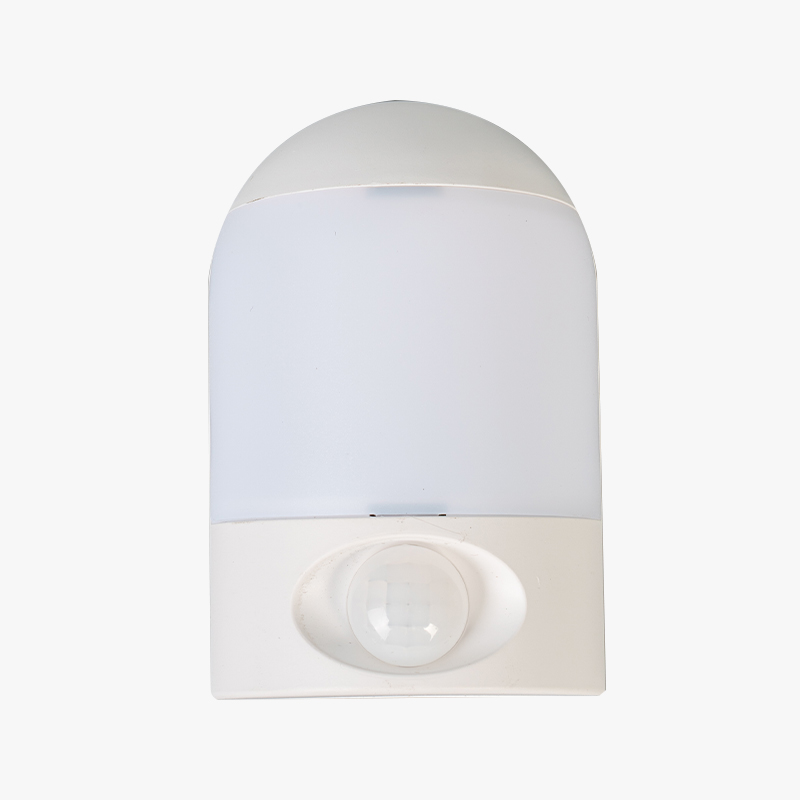
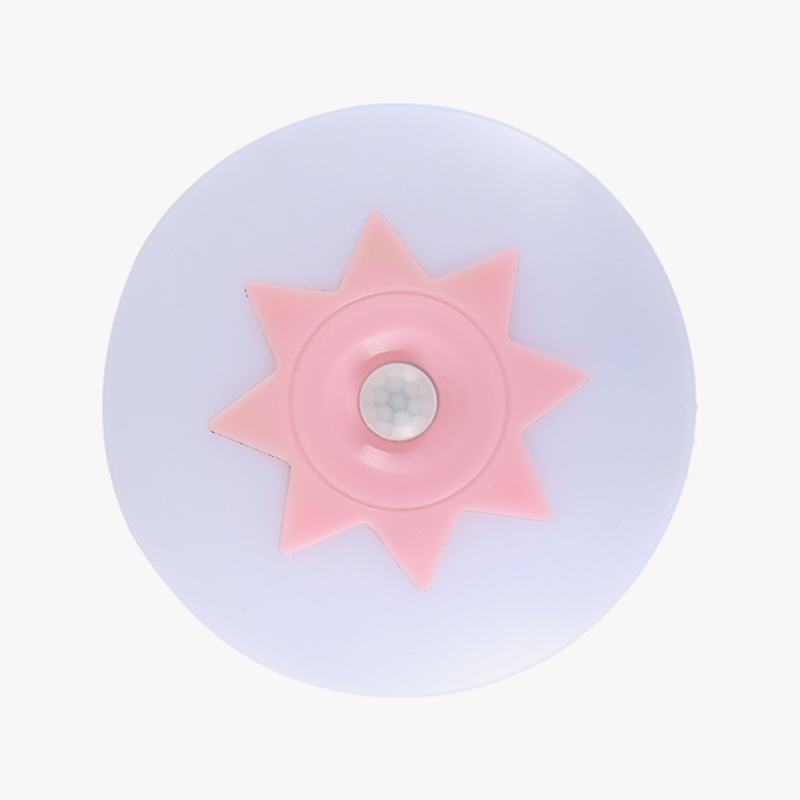
A sensor night light works by using a passive infrared (PIR) sensor to detect the infrared radiation emitted by the human body. When a person moves within the sensor's detection range, the change in infrared energy triggers the sensor's circuit, which switches on the LED light source automatically. When no further motion is detected for a preset time period after the person leaves, the control circuit cuts power to the LED and the light turns off. The process requires no manual switches — the light responds entirely to the presence or absence of body heat in its detection zone.
Content
The passive infrared (PIR) sensor is the most critical component in a sensor night light. It detects infrared radiation — heat energy in the wavelength range of approximately 8–14 micrometers — which corresponds precisely to the thermal emission spectrum of the human body at normal body temperature (around 37°C).
The PIR element itself is a pyroelectric crystal that generates a small electrical charge when it absorbs infrared radiation. The sensor is divided into two halves facing opposite directions. In a stationary scene with no movement, both halves receive the same background infrared level and the output is balanced at zero. When a warm body moves across the sensor's field of view, one half of the sensor receives more infrared than the other — this imbalance generates a differential electrical signal that is amplified by the circuit and interpreted as a detection event, triggering the light.
In front of the PIR element sits a segmented plastic Fresnel lens that divides the sensor's field of view into multiple detection zones. As a person moves, they pass in and out of these zones in rapid succession — creating the alternating high-low infrared signal pattern that the sensor interprets as motion. Without the Fresnel lens, the PIR element would respond poorly to slow movement and would have a much narrower detection angle. A typical Fresnel lens gives the sensor a detection angle of 90–120 degrees and a range of 3–7 meters.
Most sensor night lights include a photoresistor (LDR — light dependent resistor) in addition to the PIR sensor. The LDR measures ambient light levels: its electrical resistance drops significantly in bright light and rises in darkness. The control circuit uses this resistance value to determine whether activation should be permitted:
This daylight-inhibit function prevents the light from switching on unnecessarily during daytime hours, conserving battery or mains power and extending the operational life of the LED source.
The control circuit coordinates the signals from the PIR sensor and the LDR to manage the LED output. When the PIR detects motion in dark conditions, the circuit latches the LED on and starts a countdown timer. The timer is typically adjustable — commonly 10 seconds to 3 minutes — and resets each time additional motion is detected. When the countdown completes without a new trigger, the circuit switches the LED off.
This time-delay design ensures that the light remains on long enough to be useful (a person walking down a corridor does not need the light to switch off the moment they pass the sensor) without leaving the light on indefinitely when the space is empty.
Sensor night lights use LED beads as their light source almost exclusively, and this is not simply a cost-driven choice — LEDs have specific technical properties that make them perfectly suited to on-demand switching applications:
| Component | Function | Key Parameter |
|---|---|---|
| PIR sensor + Fresnel lens | Detects human body heat and motion | Detection range 3–7 m, angle 90–120° |
| Photoresistor (LDR) | Measures ambient light to prevent daytime activation | Adjustable activation threshold |
| Control circuit (IC) | Processes sensor signals, manages time delay | Time delay typically 10 sec – 3 min |
| LED light source | Provides illumination when triggered | 0.5–3W, 25,000–50,000 hr lifespan |
| Power supply | Supplies regulated DC to all components | Mains adapter or battery (3V–5V DC) |
The automatic on-demand operation of sensor night lights makes them ideally suited to locations where lighting is needed only intermittently and where operating a manual switch is inconvenient or impractical:
Your email address will not be published. Required fields are marked *

 Building E21, Wanyang Zhongchuang City, No. 555 Binhai Avenue, Binhai Economic Development Zone, Fenghua District, Ningbo City, Zhejiang Province
 0086-130-81920916
 [email protected]
Copyright ? Conbo Electronics Co., Ltd. All right reseved. Custom Led Lights Manufacturers Wholesale Outdoor Light Fixtures Factory